A donut's clock starts at the fryer and runs fast. The first 24 hours decide whether the second half of the dozen from Country Donutz tastes like a treat or an apology, and the rules for that window are simple enough to run like a calendar: what to do in the first hour, what happens by the evening, where things stand the next morning, and the point past which freezing is the only honest option left. Most donut storage advice fails by treating all donuts alike. A glazed ring, a cake donut, and a cream filled round age on three different schedules.
One principle runs through the whole day. Donuts hate two things: air, which stales them, and refrigeration, which stales them faster while pretending to help. The counter, in a closed box, at room temperature, is the right address for almost every donut inside the 24-hour window, and Salisbury kitchens rarely get cold enough indoors to change that advice.
The first hours: hour zero to hour six
Fresh donuts bought in the morning should stay in their box, closed, on the counter. That is the entire instruction for the prime window, and the common mistakes all come from improving on it. Do not refrigerate them while they are still fresh; the cold accelerates starch staling in the crumb, the process that turns a tender interior firm and dry. Do not leave the box open on a desk where office air and afternoon sun work on the glaze. Do not stack warm donuts or seal them in plastic while warm, since trapped steam softens coatings and makes powdered sugar vanish into damp spots. Room temperature in a Piedmont house, even a warm one, is fine for a day. Donuts were a counter food for a century before home refrigeration was common.
| Time since buying | Glazed yeast donut | Cake donut | Filled donut |
|---|---|---|---|
| 0 to 6 hours | Prime. Counter, box closed, nothing to do | Prime. Counter, box closed | Good. Counter for a few hours; cream fillings prefer the fridge sooner |
| 6 to 12 hours | Still good, glaze settled, texture softer | Barely changed; the sturdiest of the three | Move custard or cream filled to the refrigerator by this point |
| 12 to 24 hours | Last good window; revive briefly in a warm oven or microwave | Good, especially dunked or warmed | Eat from the fridge cold or not at all; do not re-store after warming |
| Past 24 hours | Freeze plain ones if you must; glazed rings rarely reward it | Freezes best of the three, unglazed or plain | Do not freeze filled donuts; the filling breaks down and weeps |
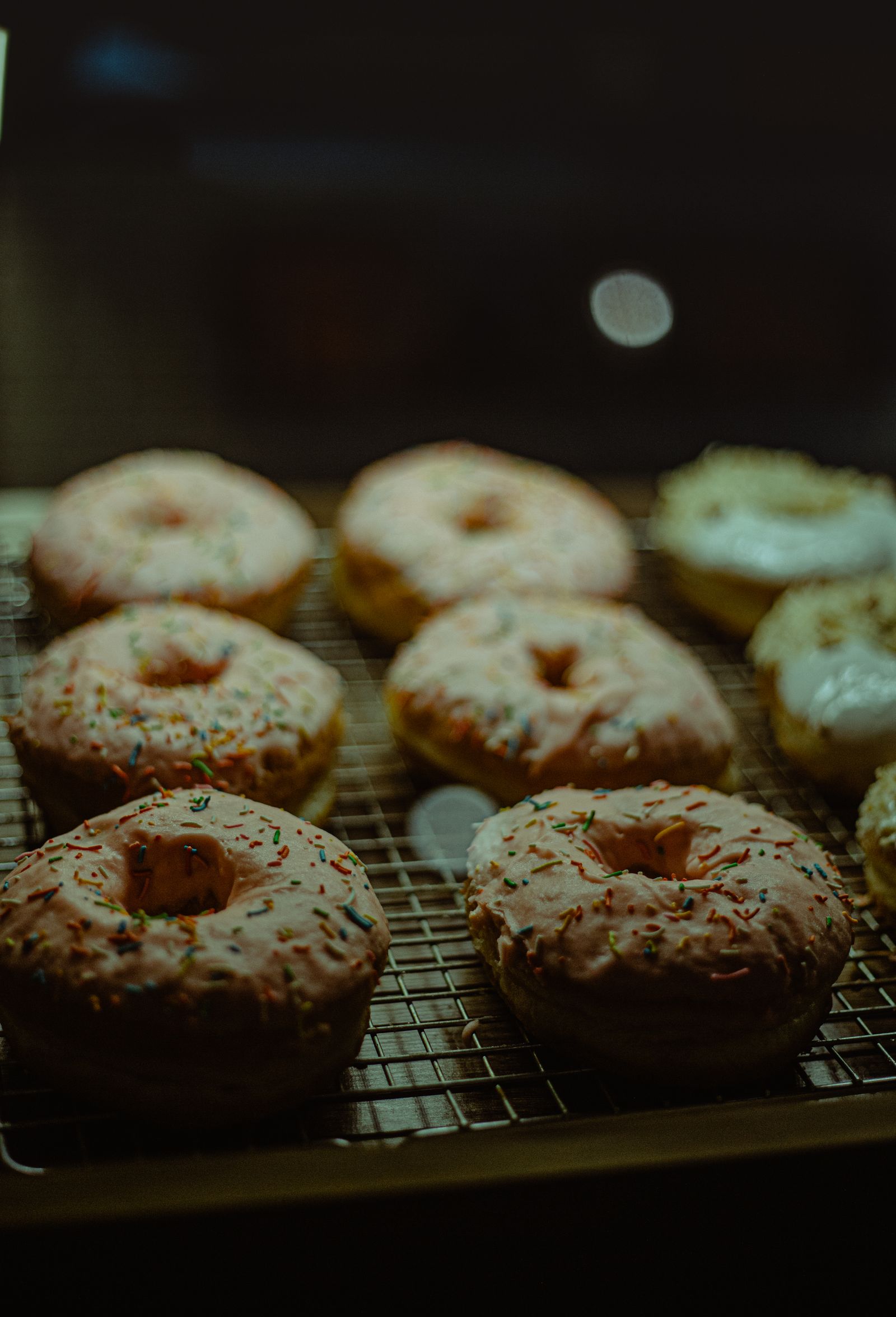
The overnight question: counter or fridge
By evening the calendar splits by filling. Unfilled donuts, glazed, cake, powdered, cinnamon, stay on the counter overnight in the closed box and are honestly fine the next morning, with cake donuts aging the most gracefully. Filled donuts need a judgment call based on what is inside. Jelly and jam style fillings are comparatively stable and tolerate the counter overnight in a cool kitchen. Custard, Bavarian cream, and whipped fillings are dairy-based and perishable, and those belong in the refrigerator, accepting the texture cost, because food safety outranks crumb tenderness. When in doubt about which filling you have, refrigerate; a slightly firm donut beats a spoiled one every time.
Reviving is the morning ritual. A glazed or cake donut brought back with eight to ten seconds in a microwave, or a few minutes in a low oven, tastes remarkably close to fresh, because warmth re-softens the crumb and re-melts the glaze. Work in small increments; five seconds too long turns a donut rubbery as it cools. Powdered donuts revive worst, since the sugar coating does not survive reheating gracefully, so eat those first the night before instead.
Freezing, and the one firm don't
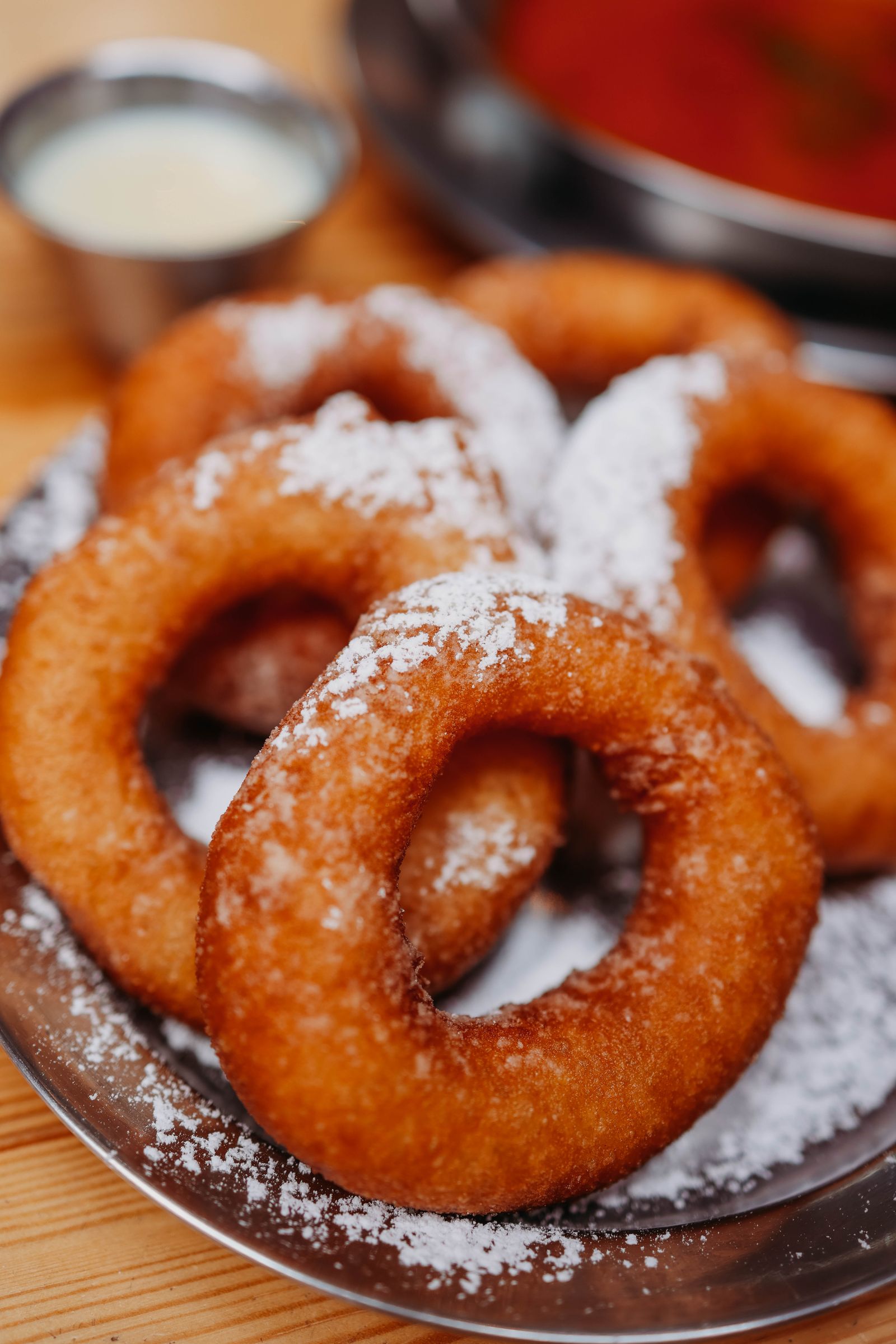
Past the 24-hour line, the freezer is a fair tool for the right donuts. Plain cake donuts and unglazed yeast rings freeze acceptably when sealed airtight, and thaw well at room temperature in their wrapping. Glazed donuts freeze passably but the glaze often sweats and turns sticky on thawing. The firm rule is filled donuts: do not freeze them. Custard and cream fillings separate and weep as they thaw, jelly turns the interior soggy, and the thawed result disappoints in a way that makes people swear off frozen donuts entirely, when the plain ones would have been fine. Buy filled donuts in the quantity the day will eat. That sentence, followed, prevents nearly every storage failure in this guide.
Common questions
Should donuts go in the refrigerator?
Unfilled donuts, no; refrigeration stales the crumb faster than the counter does. Cream or custard filled donuts are the exception and should be refrigerated within several hours for safety.
How do I revive a day-old glazed donut?
Warm it briefly, about eight to ten seconds in a microwave or a few minutes in a low oven. Stop early; overheated donuts turn rubbery as they cool.
Can I freeze donuts to keep them longer?
Plain cake donuts and unglazed rings freeze acceptably when sealed airtight. Filled donuts should not be frozen; their fillings separate, weep, and turn the interior soggy on thawing.
Photos in this guide are representative stock images.
← All guides from Country Donutz← Back to Country Donutz